Tucked in the front corner of the Carl J. Murphy Fine Arts Center, one of Morgan’s hidden gems sits quietly: the James E. Lewis Art Museum.
Originally located in Soper Library as Morgan State University’s Gallery of Art, the museum has been part of campus since 1951.
It is open to Morgan students Monday through Friday, and to the public Tuesday through Friday, from 11 a.m. to 4 p.m.
The museum is currently divided into five main areas: visiting artists, the “Frederick Cornelius Alston: Art and Legacy in the 20th Century” exhibition, recent acquisitions, the “By Our Hands” exhibition curated by high school students, and its extensive collection of African art and objects.
Faculty and senior student work is also displayed at least twice a year.
The James E. Lewis Art Museum houses what staff describe as an “eccentric” collection, with more than 4,500 donated objects from around the world.
Still, its focus remains clear: African and Black diaspora art.
“We are Maryland’s premier museum for African and Black diaspora art,” said Schroeder Cherry, the museum’s curator. “There’s no one else in the state of Maryland that has more of a focus on African and Black diaspora art.”
The museum is named after James E. Lewis, former chair of the art department and founder of Morgan’s art education major.
Lewis created the museum to preserve Black art, enrich the student experience and expand exposure to the arts.
That mission continues to guide the museum today. Every program, lecture and exhibition is free and open to the public.
“The accessibility of it, that’s what’s vital,” said Shaqueta Alston, the museum’s registrar. “It’s making sure that these resources are here for the students.”
She said providing a safe space to experience and showcase art was one of Lewis’ core principles.
The museum also offers youth initiatives, including a summer program where high school juniors and seniors simulate the work of museum curators.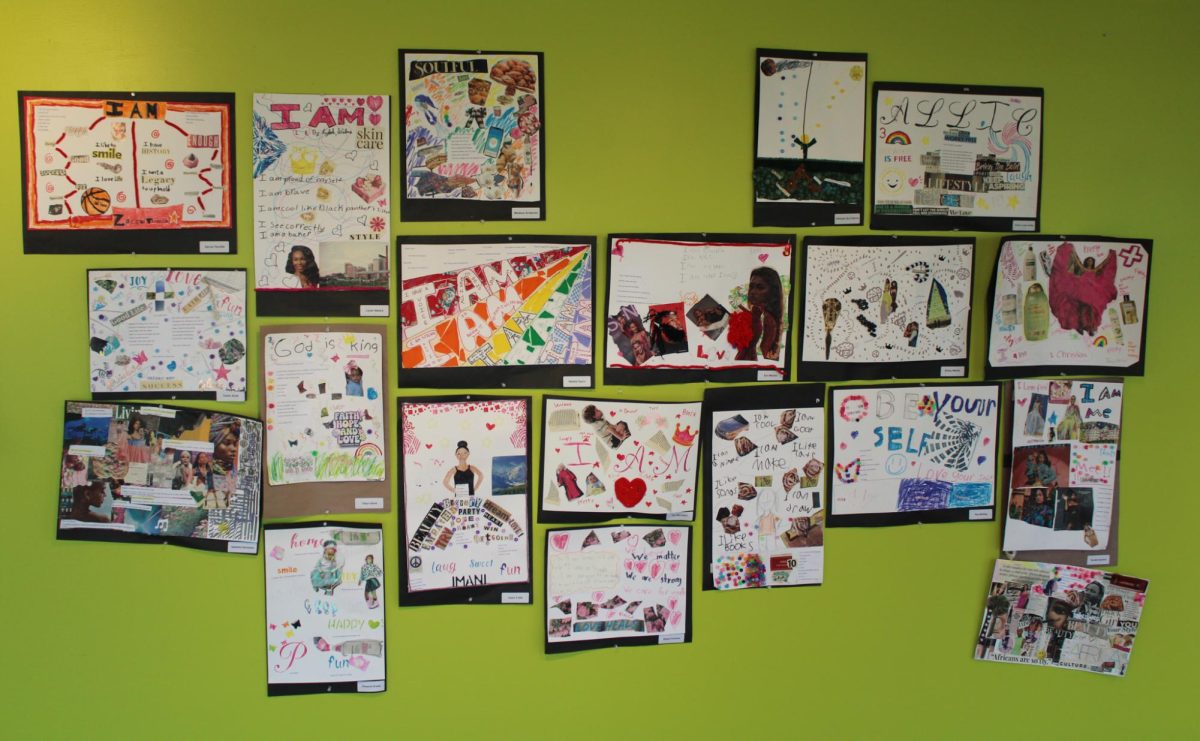
“They literally go down into the depths of the art collection and select pieces that they identify with and that tie to the concept of the exhibition,” Alston said. “They have to physically install the entire show.”
Assistant director Robin Howard frequently visits Baltimore public schools to promote the museum and spark interest in the arts.
Despite its range of free programs, the museum still struggles with student engagement.
“Our intention and our hope is to get more faculty and students engaged in the museum,” said Cherry, noting that many on campus are still unaware it exists.
Most visitors are connected to Morgan’s visual arts department, but Cherry encourages faculty across disciplines to incorporate museum visits into their courses.
“We try to help students and faculty understand how they can connect our collections and exhibitions with whatever they’re teaching,” said Cherry. “Whatever you’re teaching, we can find a connection.”
Staff say they remain hopeful that more students will take advantage of what the museum offers.
“I think because it’s so multifaceted, and there are so many types of people on campus, there’s something for everybody here,” said Kymani Campbell, a graduate student who works at the museum.
After its student and faculty exhibitions, the art museum’s next showcase will feature a group of quilters inspired by African design in recognition of the 250th anniversary of the Declaration of Independence.
The exhibition is scheduled to run from summer through December.
From a single room in Soper Library to a full exhibition space in the fine arts center, the James E. Lewis Art Museum has grown into a place where students and the public can experience art from across the globe.
From Pablo Picasso to Morgan’s own graduating seniors and faculty, the art museum has spent more than 70 years bringing culture to campus.