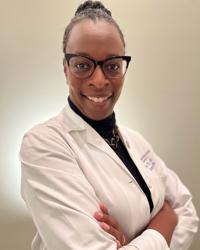
Gregory Haynes had monitored his health for years, so when a 2022 routine prostate-specific antigen (PSA) screening came back elevated, his doctor ordered an MRI and biopsy.
The Morgan alumnus and longtime chemistry professor soon faced an unexpected diagnosis — prostate cancer.
The results confirmed an early, intermediate-risk case. Haynes, who was 65 at the time, said a genetic test indicated he was a good candidate for proton therapy.
“If I had my prostate removed, I’d have about a 10 percent chance of a bad outcome,” Haynes said. “With proton therapy, it’s only 1.5 percent. That made the decision clear.”
His journey led him to the Maryland Proton Treatment Center (MPTC), where doctors are using advanced technology to change how cancer is treated in Baltimore.
During the 2025-26 academic year, The Spokesman will examine the effects of cancer on the Morgan community from the student body to faculty, staff, administrators, and alumni — in its Black Health Matters: Cancer on Campus series.
The MPTC opened in 2016 and is operated by the University of Maryland BioPark in West Baltimore. It’s treated more than 5,500 patients in the last decade, according to Dr. Matthew J. Ferris, medical director and associate professor of radiation oncology.
The technology that the MPTC uses has been a game-changer for cancer radiation treatment.
According to the Moffitt Cancer Center, the most common radiation therapy for cancer treatment uses X-rays from a linear accelerator. However, proton therapy uses positively charged particles from a cyclotron to precisely target cancerous tumors.
The main difference is how these particles move within the body and kill the tumor, but the physics underlying proton therapy makes it distinctive.
“Protons, just how they interact in the body, they have a unique phenomenon where, depending on the energy that you give them, it goes to a specific depth in tissue and stops abruptly,” said Ferris.
Ferris said that proton therapy protects the healthy tissue around the tumor, and gave the example of how if he were to treat lung cancer, the proton beam wouldn’t go through and damage other vital organs.
“For example, if I’m treating a lung tumor, I can treat the tumor and the beam doesn’t continue to pass through to the heart or esophagus or spinal cord or whatever,” said Ferris.
This precision is especially important for patients diagnosed with lung or breast cancer, where cardiac sparing can prevent serious complications.
“We know from older radiation series that less dose to the heart is better,” Ferris said. “Radiation exposure to the heart can cause plaque in the arteries. It can cause pericarditis. It can cause muscle or pericardial inflammation. It can cause electrical abnormalities.”
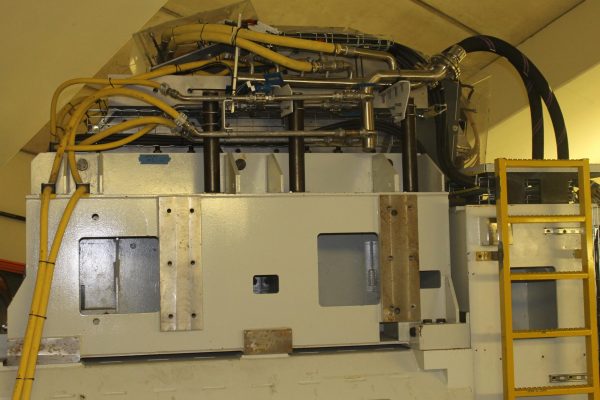
According to the Mayo Clinic, the general side effects that patients experience depend on which part of the body is being treated. Some of the side effects can include: fatigue, hair loss, skin redness, and soreness.
Melissa Albright, chief radiation therapist at MPTC, said this precision leads to better outcomes for patients with fewer side effects than regular cancer treatment.
“With proton, you have less short-term and long-term side effects, and the reason being is because there’s no exit dose with protons,” Albright said.
Proton treatment is not a new concept. Indeed, the use of protons in cancer therapy began over 80 years ago.
According to the University of Texas MD Anderson Cancer Center, in 1946, Robert R. Wilson proposed the idea of using proton therapy as a cancer treatment, and it wasn’t until the 1990s that hospitals began opening proton centers for everyday use.
Haynes scheduled his treatments Monday through Friday while fitting them around his teaching schedule at Morgan. Before each session, he was required to drink about a half-liter of water to position his bladder correctly for treatment.
“You have to drink about a half-liter of water before you go down there,” said Haynes. “Because your bladder has to be positioned so that you can have the treatment and that’s accomplished when your bladder is full. So you’re always drinking water, always, always drinking water.”
Nonetheless, the preparation for proton therapy is meticulous. Albright said that before each treatment, patients are required to undergo a CT simulation.
“During the CT simulation, it’s basically like a CT scan, that you position the patient with certain immobilization devices,” Albright said. “Is it something to where we can set up the patient to where they can hold very still?”
Once in the treatment room, the treatment process was painless and straightforward.
“The machine moves and takes different types of scannings. You can see it move, and it takes a few minutes, 10, 20 minutes, depending upon what they’re doing,” Haynes said. “I really didn’t think it was a lot of pain, I really don’t think that there’s any pain.”
Ferris said radiation therapy shouldn’t cause the patients any physical sensations during the treatment process.
“You should not be able to feel any kind of radiation when it is entering the body,” Ferris said. “So it is actually the procedure itself is painless. You can’t feel radiate protons or photons when they enter the body. It just feels like getting a scan.”
But for Haynes, the treatment itself wasn’t the hardest part.
“I had to drink a lot of water,” said Haynes. “And if I had to wait a long time because the machine broke down or there were a lot of people there, I want to go to the bathroom. That was my only problem.”
Behind each treatment session is careful planning by a specialized team. Ferris said that every patient’s case is customized based on their specific anatomy and cancer type.
“I outline where I want to treat and where I want to spare,” he said. “And then the other members on my team, there’s a group of people called medical dosimetrists, radiation physicists help to design where the beam angles come in and how many there will be.”
Albright described the technical precision required for each treatment.
“We put marks on them. We have lasers on our walls, so we mark the patient,” Albright said. “The doctor and our dosimetrist treatment planning crew will plan their treatment. What angles? What do we want to avoid? What do we want to treat?”
The precision of proton therapy is especially critical for younger patients. The National Association of Proton Therapy reports that with proton treatment, 80 percent of children have a survival rate of at least five years.
Albright said pediatric patients benefit significantly from the technology.
“(For) pediatric patients, really, it’s very effective because it reduces long-term side effects for the children that can improve cognitive ability, things like that when they get older,” Albright said.
Ferris said young patients are most vulnerable to radiation’s long-term effects.
“Young patients are most sensitive to that,” he said. “So we know from older radiation series that, for example, patients that had chest radiation for Hodgkin’s lymphoma have very elevated risk of breast cancers, lung cancers, heart issues down the line.”
The center treats various cancers, and adult patients who are diagnosed with specific cancers also benefit significantly.
“Protons will essentially always have less dose to the heart if you’re treating a patient. That’s just generally a fact,” Ferris said.
Albright said proton therapy offers options for patients who need retreatment.
“People that have retreats, maybe they were already treated with photons,” said Albright. “They can’t get photons again, but they can get protons because then we can avoid dose because it stops.”
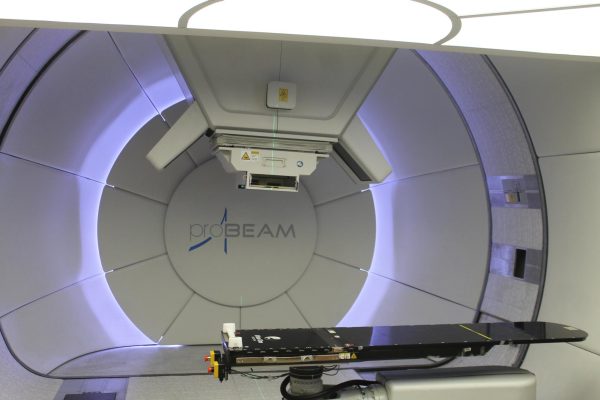
Despite its advantages, proton therapy isn’t widely available due to its high cost. With only 46 proton centers nationwide, many patients must travel significant distances for treatment.
Nonetheless, the MPTC has worked to make the technology more accessible through cost neutrality—an agreement that allows the center to charge the same as traditional radiation therapy.
“We’re really fortunate in the state of Maryland that early, when the center was being developed, the leaders of this center went to the insurers and the leaders in the state to say, ‘Hey, here’s this advanced technology. You don’t have to pay us more for it,’” Ferris said.
This approach has helped ensure equitable access for all patients who decide to get treatment at the center.
“The demographics of our center here mimic the demographics of the surrounding region and state and hospital across the street,” Ferris said. “So we’re doing a good job at making sure access is sort of equal to all.”
The proton center also provides support services for patients facing financial barriers. Albright has been actively fundraising to help patients with transportation and other needs because “I think it’s very important and very helpful for our patients.”
The center accepts donations, Albright said, and offers free transportation for patients in financial need
For the medical staff, treating cancer patients daily brings both prizes and challenges.
Albright, who has worked in radiation therapy for 20 years, said the emotional weight of the work, can be difficult to bear, but ultimately “very, very rewarding” when a patient beats cancer.
“It’s great seeing them coming back because they come back for follow-ups and they say, ‘Hi, I’m feeling great and my cancer is gone,’” Albright said “And there’s nothing better than a feeling to know that you have helped someone beat that battle.”
Albright acknowledged the difficulty of forming connections with patients over weeks of daily treatment.
“You try not to get attached to people and patients. You try to be professional, but it is very hard when you see them every day through the duration of their treatment, you start building that professional relationship,” Albright said. “We all care. We have feelings.”
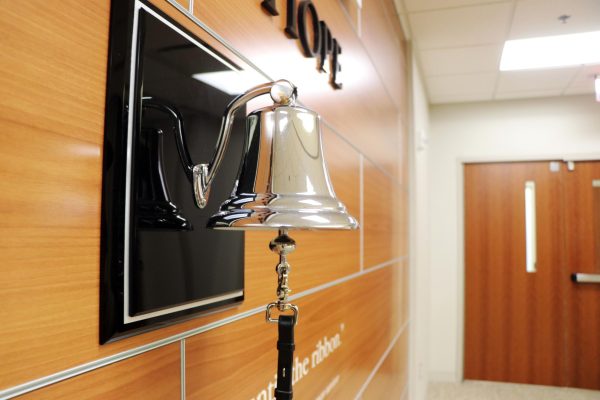
Three years after his final treatment, Haynes said he remains cancer-free, but is awaiting the results of his most recent PSA test.
Haynes manages some lingering side effects, including incontinence that requires medication and lifestyle adjustments.
“The urges went away after a few weeks,” said Haynes. “Now I only get up once a night to go to the bathroom.
For students and young adults facing health concerns, Haynes said being proactive is key.
“If you have a problem, see your doctor right away. It’s not going to go away and find out what you can do to help yourself,” Haynes said.
Haynes also suggests people make better daily food choices and consider lifestyle changes to help ward off cancer, including eating non-starchy vegetables and limiting daily sugar intake to 30-50 grams.
“We have to go back to exercise and eating right. That’s the bottom line,” said Haynes. “If we exercise more, if we do our homework and eat right, and read a book, a lot of things can happen.”
For Haynes, who continued teaching throughout his treatment, the message is simple: early detection and access to advanced treatment can save lives.
“Don’t be afraid to advocate for yourself,” Haynes said. “It could save your life.”
If you would like to share a cancer-related story, whether it’s yours or someone else’s, you know, email us at [email protected]