
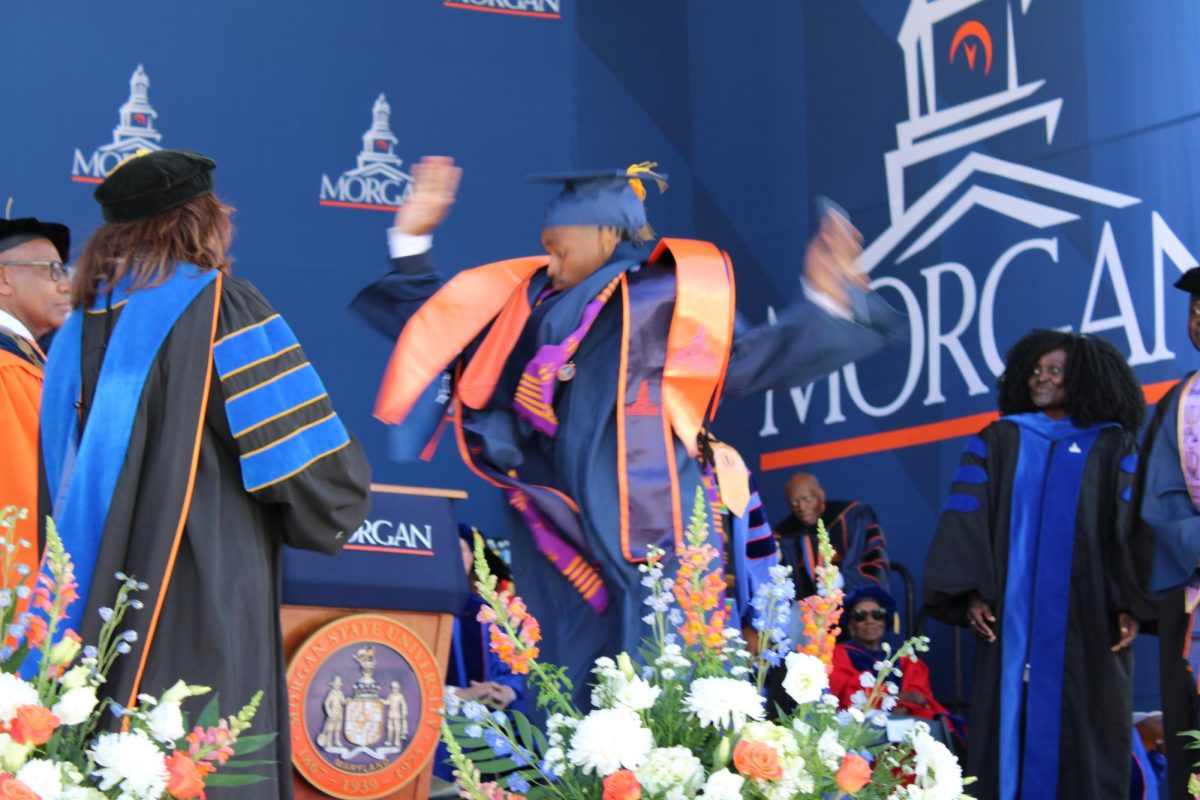
Seven months after boos echoed through Hughes Stadium and President David K. Wilson halted Morgan State University’s undergraduate commencement ceremony to address Divine Nine members for their conduct on stage, the university has now unveiled long-promised changes intended to prevent a repeat of the chaotic scene that made headlines last spring.
The new guidelines, published on the official commencement website and detailed in a statement to The Spokesman, reflect months of internal conversations, behind-the-scenes negotiations, and student-led discussions about how to preserve cultural expression without derailing the ceremony for thousands of families.
Those rules are slated to go into effect as early as Friday’s fall commencement service, to be held in the Hill Field House. Sen. Raphael Warnock (D-Ga.) is the scheduled keynote speaker, while former DeWayne Wickham, the former School of Global Journalism and Communication dean, is to receive an honorary degree.
During the May 2025 ceremony, some fraternity and sorority members danced and strolled across the stage as they received their diplomas, prompting Wilson to pause the program multiple times and warn that their behavior was “powering out the equipment” and obstructing the ceremony’s flow.
His public admonishment, met with audible boos from the crowd, ignited debate both on campus and online.
A Spokesman poll that followed a story about this conduct, showed overwhelming support for tighter ceremony rules.
In the months since, Morgan officials have worked with student leaders to redefine how commencement will be conducted.
In June 2025, weeks after the ceremony, leaders of the National Pan-Hellenic Council met with Wilson and senior administrators to confront what happened and determine how future commencements should unfold.
According to the university, Divine Nine student leaders acknowledged the disruption, issued apologies, and began working with administrators to create a plan that honored both tradition and order.
Antonio Sims, a senior psychology major from Upper Marlboro, and vice president of the campus chapter of Phi Beta Sigma, said fraternity and sorority leaders broadly agreed that the conduct seen at the ceremony was not representative of Divine Nine values.
“I feel like all of us as Divine Nine members kind of already agreed that it was out of character and out of line,” said Sims.
The meeting marked the beginning of months of collaboration among NPHC, the Student Government Association, and Morgan’s Office of Student Life and Development.
One of the changes is the reinstatement of mandatory, in-person graduation rehearsals, a requirement Morgan says is essential so students clearly understand what is allowed before stepping onto the stage.
The university has also released updated conduct expectations, directed at both graduates and their families, outlining prohibited actions, ceremony etiquette, and the consequences for those who disrupt proceedings.
These rules are now publicly accessible on the commencement website and are being shared throughout the graduating class.
Sims said the conversation with Wilson focused less on punishment and more on logistics and safety.
“He was really just telling us what his priorities were, making sure everybody had the same good experience, no delays, and that everybody was safe,” said Sims.
He added that damage to stage equipment and disruptions to ceremony flow played a significant role in the university’s concerns.
To balance cultural celebration with ceremony order, Morgan and NPHC leaders agreed to create a new, formalized celebratory moment during the ceremony.
Beginning in spring 2026, students will have a structured opportunity to express pride without halting the recognition of each graduate.
Sims said many people misunderstand why Divine Nine members celebrate on stage.
“People think it’s about stealing the light or creating a separate personal moment,” said Sims. “And that’s not always the case.”
He said the proposed changes could preserve tradition while respecting the ceremony’s structure.
“I feel like it balances the cultural experience,” said Sims. “It’s not about dimming our accomplishments. It’s about finding other ways to celebrate.”
In a statement provided to The Spokesman, Morgan said the renewed structure aims to “preserve Commencement as a dignified and joyful celebration of our students’ academic achievements.”
Wilson previously commented that the 2025 disruptions “did not reflect well” on students or the university.
With the newly implemented guidelines, Morgan hopes future ceremonies will allow graduates and their families to “experience the significance of this milestone” without the interruptions that defined last spring’s event.


